
Psychedelics are psychoactive substances that can profoundly affect cognition, perception, and mood. They are generally considered to have low physiological toxicity and low dependence potential. Their use predates recorded history and has occurred within diverse sociocultural and religious contexts, including healing practices and responses to psychological distress. Most classic psychedelics act as full or partial agonists at serotonin receptors; this receptor activity is central to their effects (Nichols, 2016).
Modern psychedelic research began after Albert Hofmann discovered LSD’s psychoactive properties in 1943. The first clinical study was conducted in Europe in 1947, and research in the U.S. began in 1949. Given the clinical safety observed, their potency, and their ability to produce long-term positive psychological changes, many behavioral science researchers, alongside the pharmaceutical industry, began to view LSD, psilocybin, mescaline, and other psychedelic substances as tools for psychiatric research and potential treatments for mental disorders, and psychedelic research was at its peak.
In 1962, following legislation requiring more rigorous testing of drugs and substances for human use, alongside the development of controversial patterns of LSD use that led to illegal production and distribution, historical changes, and deepening social polarization within the U.S. (between the “counterculture” movement, whose prominent figures advocated for LSD use, and conservative political trends), the image of psychedelic use was damaged. This culminated in the 1970 ban on private psychedelic use, which also severely hindered research into these substances (Belouin & Henningfield 2018).
After about 20 years of limited research in the field, a renewed wave of research into the effects of psychedelic substances on human subjects began in the early 1990s and continues to grow today. This is due to the increasing demand in the mental health field for new treatments to support complex mental disorders for which existing treatments are ineffective or inapplicable due to side effects, difficulty of implementation, or high costs.
Most psychiatric medications require daily use over a long period (and sometimes permanently) to alleviate symptoms. Psychedelic therapy, by contrast, offers a significant reduction in symptoms that is maintained over time, for example, following a single psilocybin treatment session (Carhart-Harris et al. 2016 in Belouin & Henningfield 2018) or a short-term treatment protocol for PTSD using MDMA.
MDMA-assisted therapy is an example of the use of a consciousness-altering substance that was once banned and today, following research, has gained the status of a potential breakthrough therapy tool for Post-Traumatic Stress Disorder (PTSD) (Multidisciplinary Association for Psychedelic Studies, 2017a in Belouin & Henningfield 2018).
Set and Setting in Therapeutic Psychedelic Use
With the resurgence of psychedelic research, particularly in the fields of mental health and therapy, questions arise regarding the structure and manner in which psychoactive and psychedelic substances should be used for therapeutic purposes. In this context, it is important to address the reliability and predictability of psychedelic substance activity. While standard medications have a uniform indication without regard to elements of culture, personality traits, mood, mental stability, and the environment in which the drug is taken, psychedelic substances are heavily influenced by these elements (Feldman 1963 in Hartogson 2017). In the 1960s, the question of “non-drug-specific parameters in psychopharmacology” was widely debated and has not been fully answered since. Today, we know that the placebo effect, nocebo effect, and user expectations play a role, but a theoretical and empirical framework explaining why and how these effects occur is still lacking (Brown 2012 in Hartogson 2017). In the study of the extra-pharmacological factors of psychoactive substances’ effects on the mind, the concept of set and setting is a central, applicable, and researchable concept.
The set and setting theory was conceptualized by psychologist Timothy Leary, who was a significant figure in psychedelic research in the 1960s. According to this theory, the effect of psychedelic substances depends significantly on “set” factors—intra-personal factors (personality, preparation, expectations, intention, desires, experience, etc.)—and “setting” factors—environmental factors (the physical environment, the cultural and social climate in which the psychedelic experience occurs) (Leary et al., 1963, 1964; Metzner and Leary, 1967 in Hartogson 2017).
Although the conceptualization of set and setting was born out of psychedelic research and is particularly applicable and accepted in this context, contemporary research shows that non-pharmacological factors are responsible for a significant portion of the therapeutic benefits of conventional drugs and substances, similar to the set and setting theory. Thus, even in psychotherapeutic treatments, factors non-specific to the treatment method, such as the personality traits of the therapist and patient, and the therapeutic relationship between them, constitute a large part of the factors contributing to treatment success (Hovarth 2018).
Issues of set and setting form the basis for explaining the vast variance seen in results among studies conducted on psychedelic substances in the 20th century. The roots of traditional use of consciousness-altering substances show that consideration of cultural and social background and characteristics unrelated to the substances were taken into account even before recorded history. Shamanic healing rituals included many elements designed to emphasize and control the effect of the substances taken, through the use of ritual songs, whistles, rattles, perfumes, blowing smoke, and “sucking” the illness out of the patient, and many other indigenous practices (Beyer, 2010; Dobkin de Rios, 1976, 1984 in Hartogson 2017). Nature elements were also used, such as addressing the cardinal directions, climbing a mountain, bathing in a river, using fire, and so on.
In his article, anthropologist Wallace (1959 in Hartogson 2017) describes the significant differences in the perception of hallucinations in Western psychiatry compared to indigenous societies. While in psychiatry hallucinations are an indication of mental illness and usually lead to institutional medical intervention, in indigenous societies they are considered a source of relevant knowledge for the individual and society. When he compared the effect of mescaline given to Western subjects in clinical trials versus its effect in indigenous rituals involving the consumption of peyote (which contains mescaline as a central component), the differences were many: the Westerners showed high mood volatility between depression and anxiety to euphoria, suspicion bordering on paranoia, feelings of loss of contact with reality, lack of meaning, and identity confusion, and did not experience benefit from the experience. In contrast, the indigenous ritual participants showed mood stability alongside excitement and religious wonder, and reported a sense of deep connection that contributed to their integration into the community. Many of the differences, according to him, stemmed from the framing and social place given to peyote and the “hallucinations” among the ritual participants.
Psychedelic insights are often experienced as immediate and unmediated, but are heavily influenced by social expectations and the ability of significant figures to validate the experience. In Wallace’s example above, one can see the tremendous influence of the social context that mediates and structures the psychedelic experience as desirable and part of society, and its impact on the immediate experience and the integration of the psychedelic experience.
Psychedelic Psychotherapy
Timmermann, Watts, & Dupuis (2022) propose a model for the therapeutic use of psychedelics. In this model, the unique nature of the psychedelic experience and its sensitivity require the therapist to have a different approach to the patient compared to standard psychotherapy. It is important that the therapist act without judgment toward the content and processes occurring during the encounter with the psychedelic substance, that they have a positive attitude toward unusual states of the self (e.g., ego dissolution, mystical experiences, emotional flooding, etc.), radical acceptance of intense emotional states and divergent thinking, and a sense of security in the face of frequent and sometimes chaotic fluctuations in the patient’s state. A significant part of treatment success lies in the therapist’s ability to validate and resonate with the patient’s emotions through “empathic resonance.”
In the proposed model, the therapist undergoes initiation, which can be done through supervision by those with extensive experience in the psychedelic experience, or through the therapist’s own personal psychedelic experiences. This initiation is added to the therapeutic qualities required in any therapeutic setting and serves as a complement to create a more adapted response to the content arising during psychedelic use.
Psychedelic psychotherapy involves the use of a psychedelic substance in a series of sessions structured to create a beneficial setting, to prepare, shape, and interpret the psychedelic experience. Most contemporary studies structure a series of three types of sessions—preparation, substance administration, and integration (Bogenschutz & Forcehimes, 2016 in Nielson & Guss 2018). The three types of sessions are used to prepare participants for the encounters with the substance, create a therapeutic alliance, guide them safely during the psychedelic experience, and assist in translating the experience into long-term change.
Psychedelic psychotherapy typically uses medium to high doses of the psychedelic substance over 1–3 sessions, spaced several weeks apart, with the intention of creating an intense experience for the patient that touches on autobiographical layers or mystical feelings (of meaning, wonder, connection), followed by addressing how to apply them in integration sessions. This is different from other treatment methods such as psycholytic psychotherapy, where lower doses of the psychedelic substance are taken and regular psychotherapy occurs simultaneously, sub-threshold doses (microdosing), taking the substance without psychotherapy, and more.
The Importance of a Therapist’s Personal Experience with Psychedelic Substances
Experience with psychedelic substances was a significant and often undocumented part of the development of psychedelic therapy and psychedelic research in Europe and the U.S. from the 1950s to the early 1970s, when for many researchers, their personal experience and its influence were a central motivation for their activity in this field.
Today, there is caution among therapists and researchers in academia regarding the question of their own experience with the psychedelic substances they study, likely due to fear of negative evaluation of their research as biased and unreliable (Forstmann & Sagioglou 2020 in Emmerich & Humphries 2023).
In psychotherapy research, factors related to the therapist but not to the drug (or the therapeutic method), such as relationships with people of other ethnic or racial backgrounds, personal stability, and readiness for the therapeutic process, have been found to be significant to treatment outcomes (Green et al. 2014, Larrison et al. 2011 in Nielson & Guss 2018).
In psychedelic research, Hyde (1960 in Nelson & Guss 2018) examined the influence of the behavior of the research team and therapists on the outcomes of LSD psychedelic therapy and found that when the research team and therapists were less friendly, this had a negative effect on treatment outcomes.
In a search for current studies as of July 2023, not a single study was found that examines the effect of a therapist’s personal experience with psychedelic substances on treatment outcomes.
There is difficulty in finding a stable and objective effect of psychedelic treatment without the influence of the intra-personal characteristics of the patients, the intra-personal characteristics of the therapist, the interpersonal ones between them, and the influences of society, environment, and physical conditions; therefore, it is appropriate to consider these characteristics and investigate their degree of relevance to the outcomes of psychedelic psychotherapy.
Indeed, in the mid-1960s, researcher Herb Kleber planned an experiment that would compare the therapeutic outcomes of LSD psychotherapy between therapists who had previously experienced LSD and those who had not. The study was ultimately not completed due to the cessation of the regular supply of LSD to the U.S. at that time (Nielson & Guss 2018).
In a study by Nielson (2021), an analysis was conducted of data collected at Spring Grove between 1969 and 1974 during research on training therapists in LSD. Although this is an old study, it is the most current (and only one to date) that collected data on the role of using a psychedelic substance as part of the training of the therapists using it. In this study, a quantitative analysis was performed of the therapists’ responses to questionnaires about the effect of the LSD experience on them and their training as therapists. A significant increase was found in the level of interest they showed in psychedelic substances, the understanding they felt regarding these substances, their belief in the educational value and significance of the experience, and the willingness to experience LSD again under medical supervision. No increase was found in their willingness to take LSD again without medical supervision. In the verbal reports, the therapists noted the experience as important for them both personally and for their competence as therapists using psychedelics.
Today, in the MAPS organization’s therapeutic training for PTSD treatment using MDMA, psychotherapists themselves are allowed to undergo a therapeutic session with MDMA. No research has been conducted on the effect of this experience, but anecdotal reports suggest that the therapists felt the experience contributed to their competence as therapists in the study (MAPS 2010, Halberstadt, 2014, p. 5 in Nielson & Guss 2018). Some of the various training programs for ketamine-assisted psychotherapy also offer ketamine to training students as part of their training process (Nielson 2021), but here too, the effect of the experience on the therapists’ competence or change in their perceptions has not been studied.
The Initiation Model
One can think of the experience of therapists with the psychedelic substances they work with, which includes guidance and supervision in a therapeutic context, as an initiation process. One parallel to an initiation process is the training of healers who use psychedelics in a religious-ritual context, which includes extensive personal experience with the substances they will use in the future to diagnose and treat their patients’ difficulties.
In the Bwiti religious rituals, which are a central part of tribal culture in Central Africa, the Iboga plant is used. A large group of tribe members takes part in the rituals, which take place in a circular initiation model—new participants in the ritual receive a high dose of the plant and are supported by the ritual leaders and veteran participants, who themselves take smaller amounts to maintain alertness throughout the night and be with the “initiates” in a similar state of consciousness. Those same new participants will in turn become those who support others, within the framework of initiation rituals, rites of passage, treatment of various problems, and so on.
In Ayahuasca rituals performed in tribes in the Amazon, shamans are required to undergo initiation, during which they themselves undergo the ritual many times, under the supervision and teaching of a more senior shaman (Fernandez & Fernandez, 2001; Thomas & Humphrey, 1996 in Nielson & Guss 2018).
Another possible parallel is the training given to therapists in psychotherapy. In psychotherapy, the personal therapeutic process that the therapist undergoes is considered significant and is sometimes even required as part of the training program. This process is significant for the therapist’s understanding of the intra-psychic processes they undergo, and thus they are benefited and arrive more competent for therapy, and in addition, there is a benefit in the therapist’s personal familiarity with the role of the patient.
In studies conducted on the effect of a therapist’s personal therapy on their clinical success, it was found that therapists who had been in therapy were more aware of countertransference processes, their patients remained in therapy longer, and their therapeutic alliance was stronger (MacDevitt 1987, Gold & Hilsenroth 2009 in Nielson & Guss 2018). Therefore, it is reasonable that in psychedelic psychotherapy, there would also be a benefit with therapy and personal familiarity with the treatment method and the substance with which they are expected to treat.
The Subjective Experience – A Philosophical Angle
In the thought experiment about “Mary the Monochrome,” Jackson (1986) deals with the meaning of knowledge from a personal perspective. In this thought experiment, we are asked to imagine a scientist named Mary who spent her whole life in a black-and-white room. Mary learned all the neurophysiology and scientific knowledge related to color vision. In the experiment, Mary finally leaves the room and sees color for the first time, and we are asked: did she learn anything new? Did her experience create information that did not exist for her previously in books?
The goal of this thought experiment is to challenge the reductionist perception that claims all mental activity can be explained by physiological processes. His claim in the article is that there is knowledge of the type of personal experience that cannot be transferred by learning the subject.
In the article “What Is It Like to Be a Bat?”, Thomas Nagel (1974) gives the bat as a parable for subjective knowledge that we cannot understand from an external perspective. According to him, even if we collect all the possible information about the physiology of the bat and all its behaviors, we still cannot know what the experience of being a bat is. Since bats have the ability of echolocation—emitting sounds and analyzing their echoes to locate their prey—it is likely that the experiential way in which they perceive reality is fundamentally different from our human perception.
When we approach psychedelic substances, psychotherapy, meditation, or any other activity that significantly affects consciousness, external learning about them cannot, in my opinion, produce the subjective knowledge that comes as a result of personal experience. Therefore, structured personal experience is needed to develop the first-person knowledge required to appreciate the experience in its full depth and to guide and support others who undergo it.
Personal Reflection:
At the beginning of 2016, I was in my second year of a master’s degree in neurobiology in the Laboratory for Brain and Behavior Research under the guidance of Prof. Abraham Zangen. The laboratory was engaged in developing methods for brain treatment of ADHD, depression, and addictions using deep transcranial magnetic stimulation (dTMS).
I arrived at the laboratory out of a desire to take part in the forefront of research in treatment—personalized psychiatry—but in practice, I found that biological research, important as it may be, failed to produce in me the sense of meaning and connection I longed for. Practically, most of the day I was busy analyzing electrical signals and assembling the device that reads them for subjects, and the intellectual curiosity I still had as part of the multidisciplinary undergraduate degree I studied (psychology, brain and cognition, and philosophy of mind) was fading.
The research I conducted dealt with the effects of brain stimulation on physiological and psychological dimensions, and it was found that physiological manipulation (brain stimulation) significantly affects physiological processes but not psychological ones. A similar finding was also found for psychological manipulation (which affects mainly the psychological dimension). The feeling that was created in me following these results was that the most direct way to achieve mental change is through working with the mental dimension. The degree studies, which dealt mainly with the physiological dimension, ceased to match my main interests, which were and still are assisting with mental states and developing consciousness.
Parallel to my degree studies, I began to practice meditation through a mindfulness group that met at the university, and I was also exposed to shamanic rituals with consciousness-altering substances. The meditation practices and shamanic rituals exposed me to experiences I had not known until then, and I felt there was tremendous potential for healing in the mental dimension.
Following these experiences, I decided to leave my master’s programme after a year and a half and to learn traditional treatment methods directly. I was curious and enthusiastic to discover the possibility of addressing difficulties in my own life, and I was also interested in the possibility of using these approaches therapeutically. And so, after a preparation period that included intensive reading about tribal cultures around the world and shamanism, and learning Spanish to a level that allowed me to communicate comfortably, I arrived in Peru, where I stayed for about two and a half years in total.
Shamanism from Personal Experience – Things I Learned on the Mountain and in the River
During my stay in Peru, I began to learn the shamanic traditions common in the country, and later I also travelled overland across Latin America, stopping in regions with living shamanic traditions to interview traditional healers, from Mexico in the north to Brazil in the south. I found that it is common to divide shamanism into three “streams”: indigenous shamanism, “mixed” (mestizo) shamanism, and neo-shamanism.
Neo-shamanism refers to the practice that takes place among people who come from different countries (or more developed areas within Peru, where the shamanic tradition does not exist or is not common). Learning is not governed by intergenerational transmission, and therefore, the learning is usually from several teachers (and several plants, which are also considered teachers) and is more eclectic in terms of the traditions and tools used. While traditionally rituals tend to be less focused on psychological support, and under different conditions than what is customary in developed countries, in the “modern” rituals I underwent, there was a very strong emphasis on the personal psychological process that the participant undergoes, including sharing and support circles during and after the ritual. In addition, the music in the rituals is more harmonious and complex, and usually, the reference is less religious and more toward a perception of total unity.
The term “mestizo” refers to mixed origin, indigenous and Spanish. Shamanism of this type combines influences of indigenous beliefs with Spanish and eclectic influences (Christianity, and reference to Western concepts and other religions). An example of this can be seen in the San Pedro shamanism in the mountains and coast of northern Peru, which is rich in influences from a variety of nearby and even distant cultures, due to the proximity to trade routes. The use of Christian and Andean symbols is common, and it is already difficult to untangle the connection between them and understand what the “original” culture is. In such rituals, the prayers, chants, and singing are usually in Spanish, with a combination of indigenous languages sometimes. The knowledge is usually passed down in the family or by direct initiation.
The term indigenous shamanism refers to shamanism that takes place among traditional tribes, although it should be remembered that nowadays there are very few tribes, if any, that have not been influenced by the encounter with the Spanish conquerors or people from other countries. I, in any case, did not meet them. Nevertheless, there are many traditions, values, stories, and worldviews that have been preserved.
I was mainly interested in the Shipibo-Konibo tribe, likely the most well-known tribe today regarding Ayahuasca shamanism. There are many other tribes and traditional uses known for Ayahuasca, but the Shipibo tribe is likely the most well-known because throughout history they were more open to trade and therefore also had more foreign relations, also in the context of healing. In addition to healing, the traditional use was diverse and included purposes such as receiving prophecies, knowledge, powers, and also for witchcraft and harming enemies.
Staying in the center of the jungle was an important and educational experience for me; I learned about the local culture and understood better its place in the culture of referring to magical entities that dwell in the forests, rivers, mountains, and so on. Communication with the entities is a routine part of the lives of the jungle dwellers, and they function both as cultural entities and as vital figures for proper social management. The “duendes” (elves/goblins) are key entities, and many books have been written about them, detailing their traits and abilities. For example, the Chullachaqui (“the one with the deformed foot” in Quechua) is a forest-guardian elf who harms those who do not treat the flora and fauna of the place properly, or the Bufeo—the pink river dolphins of the Amazon, about whom it is told that they can change shape and impersonate men, and seduce the local women. Plants also have entities that are identified with them, and they can be seen in visions and dreams, and according to the appearance of the entities, one can identify which plant is involved. The various entities appear in songs, dreams, and prayers; the indigenous people fear them and also worship and learn from them.
From a sceptical perspective, these stories can appear implausible. On the other hand, the whispers of the wind, the silence at night, stories of experiences I heard from friends and acquaintances I met for a moment, the Ayahuasca visions—all point to the fact that even if it is not “true,” at the very least it is a useful myth, which helps to communicate and explain things in the cultural space of the Amazon.
The rainforest can feel intensely alive and, in many respects, demanding. Even when moving away from a human environment, silence is not to be found. There are always vampire bats, cicadas, crickets, ground fireflies that create a wonderful light show as they walk on bushes at night, and other noises (such as the howler monkey—a medium-sized monkey considered the second loudest creature in the world—which makes sure to howl every morning for long hours to warn all other males in the area not to approach).
A large part of the simple houses in the area where I lived are built of a roof, beams, and between them mosquito netting, meaning the walls are made mainly of netting. I slept in a hut of this type, and every night I would notice dozens of vampire bats hanging on the netting and sleeping on the nets; the vampire bats bite gently in an almost imperceptible way and then lick the blood from the wound, so their presence may arouse a constant fear of a hidden danger of possible infection with diseases. Every time I went outside the building during the hot hours, dozens of mosquitoes swarmed on every exposed piece of skin; the heat and humidity are heavy throughout the year.
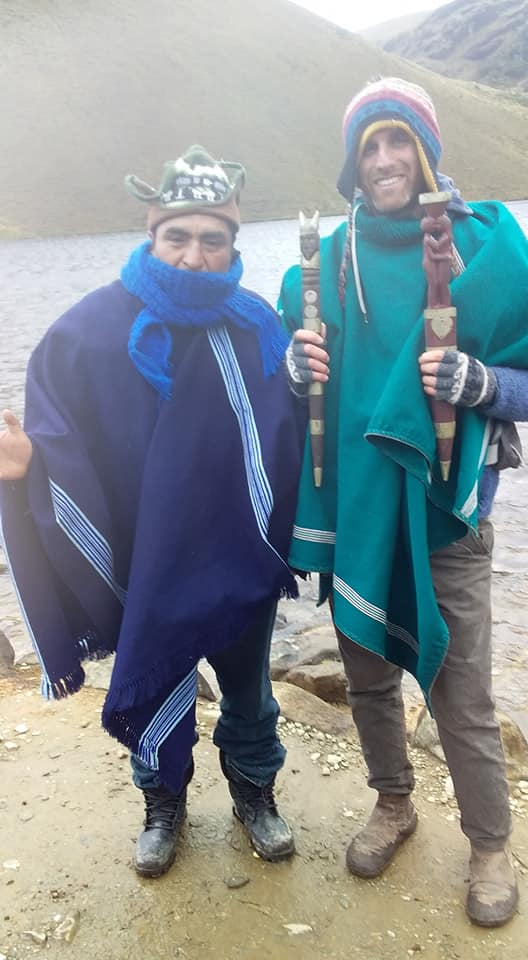
Another culture I had the privilege of getting to know is the San Pedro shamanism of northern Peru, which is divided into the Chavín culture, the Moche culture in Trujillo/Chiclayo (coastal shamanism), and the Huancabamba culture. I mainly got to know the Huancabamba, known as the “City of Sorcerers,” in northern Peru (Piura region). Due to the remote location and the lack of tourist sites in the area, the city is known mainly to locals and residents of neighboring countries who believe in shamanic healing. The city is known for the “las huaringas” lagoons—dozens of lagoons considered sacred and possessing magical healing properties.
A traditional ritual in Huancabamba is held for three days. On the first day, a San Pedro drinking ritual is held that lasts into the night. The second day, after less than two hours of sleep, includes climbing to specific lagoons in Huancabamba in order to receive their magical properties. The lagoons are at an altitude of about 4000 meters and are hours of walking apart, so the lagoons with the desired properties for the specific case are chosen. I visited the Black Lagoon, which looks dark due to the black rock in the mountain, and the “Millionaire Lagoon,” which is named after the shining reflections of the sun on the lagoon water.
In Huancabamba, the color black is used for cleansing the bad, the heavy, and the useless. The Black Lagoon, combined with black tobacco (Nicotiana rustica), is used by the healers to cleanse bad luck and all the sediments that have accumulated. In the Black (and almost frozen) Lagoon, we dipped our entire body and head seven times with the wind and rain. After that, we underwent a cleansing of the aura and all the sediments using tobacco, a sword, and perfumes. After the freezing and painful dip, it is forbidden to dry off or change clothes. We continue, frozen, to the next lagoon.
The next lagoon was white due to the mountains surrounding it. The white, which is embodied in the lagoon and the white tobacco (Nicotiana thyrsiflora), symbolizes the summoning of good luck, health, livelihood, marriage, and so on. After the dips in the lagoons and all the accompanying rituals, we returned to the modest and incredibly uncomfortable accommodation to rest until the night, when the “florecimiento” ritual is held, which comes from the word “flor” (flower), whose purpose is also to summon good luck and prosperity. At midnight, the ritual began, which included blessings, perfumes, and energetic cleansing.
Every traditional healer I met emphasised initiation and the healer’s personal journey as central to training. Personally, I feel that the therapeutic methods I learned academically but never experienced as a client have not remained with me in the same way, compared to methods I experienced and felt the benefit of myself, which continue to inform my work. Also, the personal therapy process I underwent and am still undergoing allows me to better understand therapeutic processes and continue to strive and develop in my training as a therapist.
Summary and Discussion
In this work, I reviewed the use of psychedelic substances in a modern therapeutic context, as well as in traditional contexts, with the aim of examining the unique characteristics of these substances and the treatment using them, and to show the importance of personal experience as part of the training process for therapists.
I presented the concept of set and setting, which is a central concept used to understand the way psychedelic substances exert their effect—substances whose effect is sensitive to set (perceptions, mood, and fixed and situational personal characteristics of the users) and setting (characteristics of the physical environment, culture, and society in which the psychedelic substance is taken).
Subsequently, I presented psychedelic psychotherapy, the variance in results in the use of substances that can be explained only by factors unrelated to the substance, and thus the relevance of the set and setting concept to psychedelic psychotherapy research. I also presented characteristics of set and setting in the traditional use of psychedelic substances, a use that predated modern psychotherapy and can be an inspiration for many elements relevant also to psychedelic psychotherapy.
I addressed the limited research conducted on the importance of the influence of personal use of psychedelics among psychedelic psychotherapists and its effect on treatment success, which presents empirical support for the importance of this experience, as well as for the importance of continuing research on the subject.
I have proposed initiation as a central element of training in psychedelic psychotherapy, and I presented the historical parallels, in the shamanic tradition on the one hand, and in Western psychotherapy on the other, which emphasize its importance and the specific qualities required for this type of therapy that develop through personal experience and initiation. I also addressed philosophical arguments regarding the uniqueness of the subjective experience that emphasize the importance of first-person experience as a source of distinctive knowledge that cannot be acquired by other means. Finally, I presented the personal initiation I underwent in Peru, which presents the importance of the initiation model and examples of the cultural context of healing using psychedelics.
The description of the cultures from which I learned and absorbed traditional knowledge demonstrates the great richness of the traditional setting, in which psychedelic substances are part of a culture that encompasses all areas of life, and a rich fabric of nature and folklore factors.
When the use of psychedelic substances is transferred to the fields of Western psychotherapy, they take a different direction compared to thousands of years of shamanic traditions that used them in a certain way with their own system of perceptions, beliefs, rules, and guidelines.
Naturally, a large part of the traditional context cannot fit the Western world and the Western state of consciousness, but elements such as initiation and personal experience of the therapist, reference to the cultural context, use of music, and reference to the body as part of the therapeutic dimension can be of great value for Western therapy needs.
In my opinion, psychedelic psychotherapy is a form of treatment that is at the intersection between traditional shamanism and modern psychotherapy. Therefore, it is important to refer to the strict ethical rules of psychotherapy, and to ensure the comprehensive training required of therapists and empirical evidence for the effectiveness of the treatments, and alongside these, it is appropriate to also refer to the cultural context from which the consciousness-altering substances come, to issues of set and setting, and also to the initiation model and the importance of the personal experience required in traditional use.
Further support for the importance of the therapist’s experience with the psychedelic experience can be found in Carl Jung, who is known as a central figure in modern psychotherapy who was also greatly influenced by mysticism and indigenous cultures. Jung likened the therapist-patient sessions to an alchemical vessel in which different substances meet and in their staying together, mutual change occurs, creating a “transformative space” (Hall, 1984, from Moshe Alon, 2019). According to him, “a therapist can help his patients develop only as far as he has gone himself” (Jung, 1937, from Moshe Alon). From this perspective, the therapist is a partner in the client’s in the therapeutic process. In my opinion, when it comes to such a unique process, involving states of consciousness that are out of the ordinary, the therapist must at the very least know the psychedelic experience from personal experience, so that they can be a true partner in the process.
Today, the legal difficulty and the existing stigma are an obstacle that makes it difficult for therapists to gain experience in a psychedelic setting; therefore, there is importance in a discourse on the subject that will change public perception. In addition, it is appropriate to create more opportunities that will allow therapists using psychedelics to experience these substances as part of their training, and to encourage research on the subject.
I believe that the experience and personal connection that will be created through the therapists’ experience in the field will contribute to their therapeutic abilities in the psychedelic setting, to the sense of trust, and to the motivation of the therapists and patients alike.
Bibliography:
Moshe Alon. (2019). Transference, Countertransference and the “Wounded Healer”: An Analytical Jungian Perspective on Therapist-Patient Relationships. Ma’arag: Israeli Journal of Psychoanalysis, 9.
Belouin, S. J., & Henningfield, J. E. (2018). Psychedelics: Where we are now, why we got here, what we must do. Neuropharmacology, 142, 7-19.
Emmerich, N., & Humphries, B. (2023). Is the Requirement for First-Person Experience of Psychedelic Drugs a Justified Component of a Psychedelic Therapist’s Training?. Cambridge Quarterly of Healthcare Ethics, 1-10.
Hartogsohn, I. (2017). Constructing drug effects: A history of set and setting. Drug Science, Policy and Law, 3.
Horvath, A. O. (2018). The psychotherapy relationship: Where does the alliance fit?
Jackson, F. (1986). What Mary didn’t know. The Journal of Philosophy, 83(5), 291-295.
Nagel, T. (1974). What is it like to be a bat? The Philosophical Review, 83(4), 435-450.
Nichols, D. E. (2016). Psychedelics. Pharmacological reviews, 68(2), 264-355.
Nielson, E. M., & Guss, J. (2018). The influence of therapists’ first-hand experience with psychedelics on psychedelic-assisted psychotherapy research and therapist training. Journal of Psychedelic Studies, 2(2), 64-73.
Nielson, E. M. (2021). Psychedelics as a training experience for psychedelic therapists: drawing on history to inform current practice. Journal of Humanistic Psychology.
Timmermann, C., Watts, R., & Dupuis, D. (2022). Towards psychedelic apprenticeship: Developing a gentle touch for the mediation and validation of psychedelic-induced insights and revelations. Transcultural psychiatry, 59(5), 691-704.
This article was originally published in Hebrew on Sagi Gottfried’s website: https://sagig.co.il/psychedelicinitation/